Fully jabbed up.

Bonfire Of The COVID Vanities
Authored by Gabrielle Bauer via The Brownstone Institute,
Remember the mega-hit book The Bonfire of the Vanities? While a work of fiction, the book shone a harsh light on the all-too-real world of lies, corruption, and hypocrisy in high places. In one of my favorite scenes, the power-couple protagonists attend a party at the home of the aptly named Bavardage family, where all the guests blab at each other with deep-fake enthusiasm, making sure to display their “boiling teeth” at all times.
Like the high society portrayed in the book, the Covid regime was replete with rot, from taped-up basketball nets and masked toddlers to vaccine passports and… slogans. Some of the slogans were carefully crafted by governments, while others sprang from the weeds of social media. They all drew from the same playbook, capitalizing on fear and using emotional manipulation to activate people’s guilt circuits. They served as thought-stopping mantras that precluded honest communication about the pandemic. To anyone with even a slightly nuanced worldview, their plodding earnestness grated like an earworm.
More below the fold.
Twitter Files: The ‘Great Covid-19 Lie Machine’ Worked to Censor ‘True Stories’
The lie machine worked overtime to censor the truth.
In the latest Twitter Files report published on Friday, journalist and author Matt Taibbi revealed that Twitter partnered with the Virality Project, which warned the social media platform that “true stories that could fuel hesitancy,” complained that “anti-vaccine” accounts were retweeting the CDC, and ironically ran searches for the term “surveillance state” while looking for more information to censor.
“The release of Dr. Anthony Fauci’s spring 2020 emails via the Freedom of Information Act has been used to exacerbate distrust in Dr. Fauci,” the Virality Project lamented in June 2021.
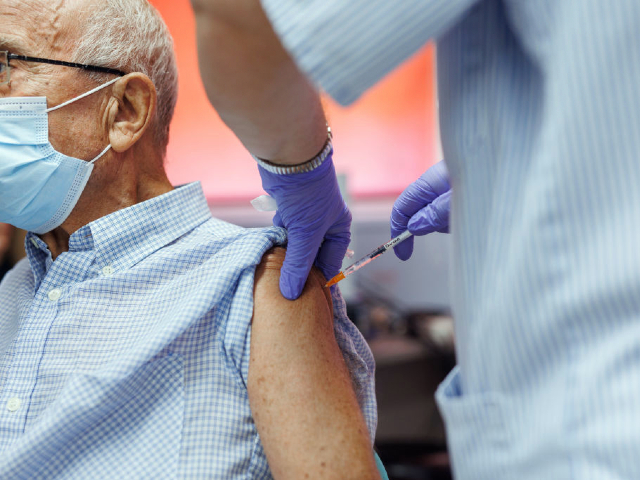
A nurse vaccinates an elderly man with the Moderna vaccine (Photo By Alejandro Martinez Velez/Europa Press via Getty Images)
The Virality Project is “a sweeping, cross-platform effort to monitor billons of social media posts by Stanford University, federal agencies, and a slew of (often state-funded) NGOs,” Taibbi noted.