
Houthis Hit Ben Gurion Airport with Missile
Israel to Retaliate Against Iran?
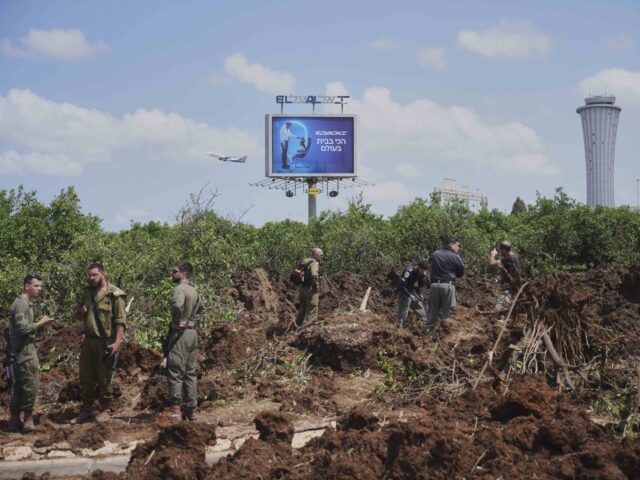
A ballistic missile fired by the Iranian-backed Houthi rebels in Yemen struck the ground inside the perimeter of Israel’s Ben Gurion Airport on Sunday, leading Israeli officials to prepare a response to Yemen — or Iran.
The missile struck “a grove adjacent to an access road, inside the airport’s perimeter,” the Times of Israel noted, after triggering sirens across central Israel and evading Israel Defense Forces (IDF) missile defenses.
Several people were lightly injured, including one who was hurt while running to reach a bomb shelter.
The Times of Israel added that both Israel’s Arrow and the U.S.-made THAAD failed to intercept the missile.
The airport, Israel’s main point of access to the outside world, was closed for an hour and several foreign carriers halted flights for several days. Israelis leaders were reported to be meeting to prepare a response.
Israel has struck Houthi targets in Yemen in previous responses. However, it is possible that Israel will target Iran instead, since Iran arms and funds the Houthis and is heavily involved in their ballistic missile attacks.
Opposition figure Benny Gantz, a former chief of the IDF, said on X: “This is not Yemen — this is Iran.”
U.S. President Donald Trump has, in the recent past, warned that Iran will pay the price directly for Houthi missile attacks. The U.S. has been attacking Houthi targets in Yemen for weeks, as missiles have continued.
Previous blog entry:
Despite government denials, this investigation uncovers evidence of slave labour in Yemen.
Filmmaker: Ashraf Mashharawi (al Jizz)
Slavery is illegal throughout the world, banned by international convention and treaty. But there is at least one country where it is alleged still to exist: Yemen.
In June 2010, a local Yemeni newspaper, Al-Masdar, reported that slavery not only existed but was growing in Yemen. It published the story of 500 alleged slaves in the country.
The government dismissed the Al-Masdar reports and insisted they were entirely unfounded.
But when a Yemeni judge approved the transfer of a slave from one owner to another, it triggered a campaign by a local journalist, human rights activists, and the wider press.
With the help of these campaigners and using hidden cameras, the makers of this Al Jazeera film investigate political figures allegedly involved in modern slavery.
They follow up several cases, hear from current and former slaves and their owners, and are able to intervene on behalf of some of the victims.