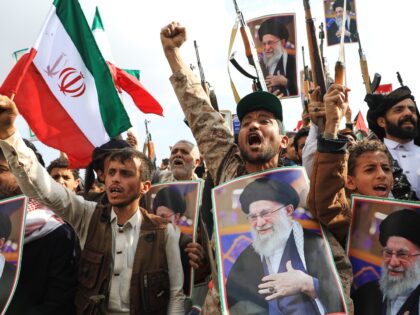
Fatemeh Mohajerani, a spokesperson for the Iranian government, says Iran has not started the war in which the country has endured “significant losses”, both in terms of human casualties and civilian homes and infrastructure.
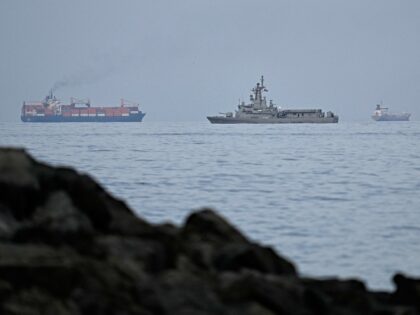
She said compensation is one of the demands that should be discussed in any negotiations, adding that control over the Strait of Hormuz and the lifting of sanctions are other key matters to be taken into consideration.
“We are willing to move towards a sustainable peace,” she said.
The truth behind the weak response of the leaders of Britain, France, Germany and other countries is far simpler: They refuse to accept that the only way to confront the ayatollahs is with force, plain and simple. The same mindset that produced the 2015 nuclear deal is ascendant now—namely, that military force is always wrong and counterproductive, and that what is needed is a return to soft power and diplomatic initiatives.
Yet such options have been tried and failed repeatedly, testing to destruction the idea that the Islamic Republic is capable of moderation. Years of negotiations on Iran’s nuclear weapons program, followed by punishing sanctions, failed to curb Iran’s appetite for an atomic weapon or a ballistic-missile program. With its long history of concealment, evasion and deception, the regime could never be trusted with agreements that limited its power. That equation has not changed.
The other reason for E.U. passivity may have to do with Ukraine. Many European diplomats are deeply concerned about the diversion of attention and military resources from Kyiv to Tehran. They fear that the war against Iran will be a boon to a Russian president who is desperate for some success after four years of indecisive war.
But this is to mistake short-term benefits for long-term strategic loss. Any weakening of Iranian power (and destruction of the very missiles that have been sent to bombard Ukrainian cities) reduces the threat both to Ukraine and the wider Middle East, ensuring that Russian President Vladimir Putin loses a much-valued client state in the region.
Another Iranian ally watching this war somewhat nervously is China, a major purchaser of cheap Iranian oil. President Xi Jinping will certainly believe that American hegemony in the energy-rich Gulf will not suit its long term interests, especially if he chooses to flex his muscles over Taiwan. He has already lost one important economic ally in Venezuela.
Perhaps a third reason for passivity is domestic in nature. There are substantial Muslim populations in a number of European countries, many members of which remain deeply radicalised by the war in Gaza. While some will side with Iranian Muslims who have borne the brunt of the regime’s savagery, many others will reflexively condemn the United States and Israel for their perceived aggression toward a Muslim country.
There are genuine fears of Iranian proxy attacks on European soil, including in the United Kingdom, where 20 attacks by Iran’s Islamic Revolutionary Guard Corps have been foiled recently and where two Iranians were charged with spying on the Jewish community. Yet while such fears cause genuine concern, they are no excuse for sitting on the diplomatic fence.
To their credit, Trump and Netanyahu are helping ensure that the Iranian threat is destroyed for a generation, potentially freeing that nation from the tyranny that has enslaved it. To their shame, European leaders remain mired in shameful and self-defeating appeasement.