
It’s all smoke & mirrors. And there are never any consequences. If they had to face the gallows, these creeps would be long gone.
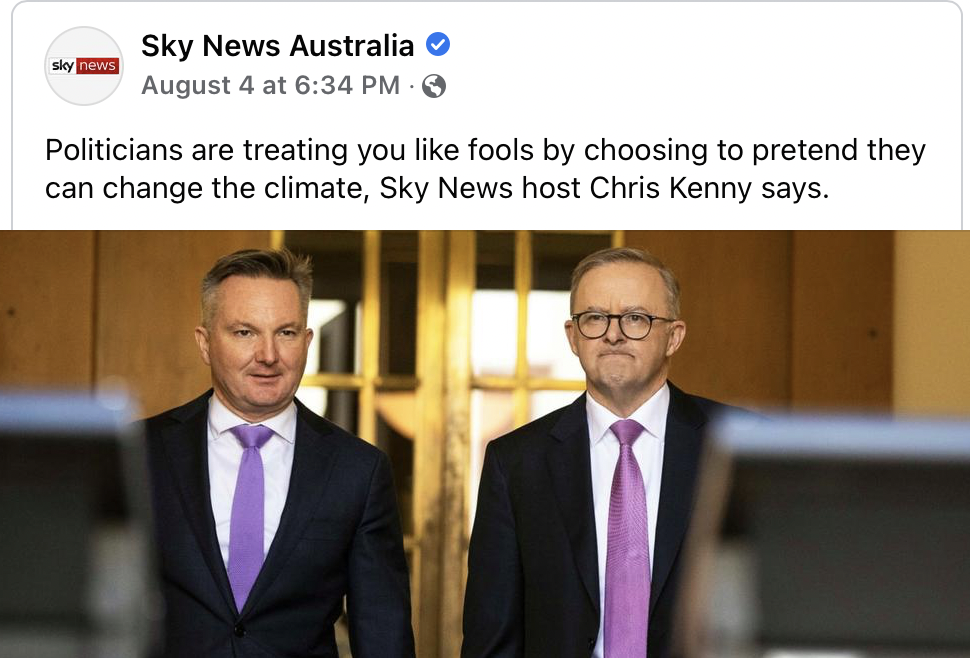
Politicians choose climate ‘delusion’ over making practical change: Kenny
Politicians are treating you like fools by choosing to pretend they can change the climate, Sky News host Chris Kenny says.
“While they continue with all this delusion, other issues are ignored, stuff where they could actually make practical changes,” Mr Kenny said.
“Like getting your power bills down and ensuring we have energy security … Like helping communities protect themselves from inevitable floods and fires, like reducing taxes, shrinking government and starting to repay debt.”
Mr Kenny said news today on the Great Barrier Reef revealed its best coral growth on record.
“Long term monitoring by the Australian Institute of Marine Science shows the best coral growth on record, that’s over about four decades.
“It is good news, good news on the environment, stuff our kids should know about – the trouble is politicians and media only want to preach doom and gloom, and alarmism.”
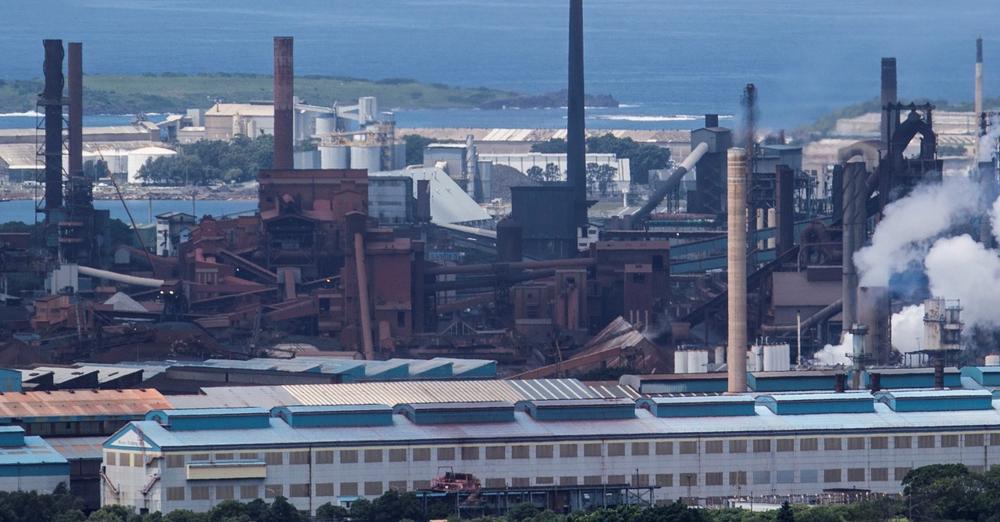
Refurbishing our coal plants to extend their working life, scrapping the renewable energy target and ramping up gas exploration is the simplest solution to Australia’s power demands in the immediate years to come, writes SkyNews.com.au contributor Gideon Rozner.
Ramping up our coal and gas production is the only way to power Australia while we get over our nuclear energy hang-up
Good on Peter Dutton for bringing on a debate about nuclear energy this week, taking aim at a longstanding sacred cow in Australian energy policy.
Starting a debate, though, is one thing.
Presenting realistic options to address Australia’s serious energy crisis is – in the case of nuclear energy – quite another.
Let me be clear that both I and The Institute of Public Affairs have long argued in favour of legalising nuclear power.
Repealing the ban on nuclear power plants, currently contained in the Environmental Protection and Biodiversity Conservation Act, was included in our 20 Policies to Fix Australia, released during the 2019 election campaign.
And it is clear that both recent advances in nuclear technology and the experience overseas – not to mention the fact Australia has about a third of the world’s uranium resources – makes nuclear power a sensible and workable power source in Australia.
It is beyond time that Australia had the debate. But a debate will not, in itself, keep the lights on.
In the meantime there are simpler and easier ways to address our energy crisis.
Here’s what a nuclear energy debate will look like.
The best case scenario is Peter Dutton goes to the next election with a pro-nuclear policy and wins. With the next federal election due in 2025, that’s about three years away.
Upon taking office, the new government will have to go through the motions of commissioning feasibility studies and the like, costing millions of dollars and in all likelihood taking a year or two to complete.
If the early studies check out, the next step will be to remove the ban on nuclear power plants (which, again I make the point, has long been supported by the IPA).
The Albanese government is taking Australia down a “very dangerous path” over its attempts to end the climate wars, Opposition Leader Peter Dutton says. “You are going to see much higher electricity prices, much higher gas prices and…
For that to happen, the Dutton government will have to shepherd an amendment act through Parliament.
Labor will probably oppose it, and the Greens definitely will, so the government will be drawn into a convoluted process of legislative horse-trading with the Jacqui Lambies and David Pococks of the world.
And even that would probably only happen after more time and resources are chewed up when the bill is punted to some committee which will relitigate all the issues addressed during the feasibility study phase.
Meanwhile, the government will have to hold its nerve in the face of a groundswell of confected opposition as various well-funded environmental groups come out of the woodwork.
Rational arguments about the safety of contemporary nuclear reactors will be drowned in a sea of emotive TV ads dredging up memories of Chernobyl and Three Mile Island.
At the same time, there would be a long, protracted debate on where any new nuclear plant would be located.
Australia does not have a good track record of such conversations.
The Coalition spent most of its recent term in government scrambling to find a long-term solution for disposing of waste from the Lucas Heights nuclear reactor in Sydney
The process started in May 2015, and it wasn’t until December last year that then-Resources Minister Keith Pitt announced a site had been found at Kimba in South Australia.
And that was just the process of finding a site for low-level nuclear waste – things like gloves used in the process of creating nuclear medicine.
God knows how long it will take to find a community that would welcome an actual nuclear power plant – let alone a site for disposing of high-level waste such as spent fuel rods.
Maybe the Dutton government would manage to sway some state premier with a hefty bag of taxpayers’ money, but even then, one bad state election result would send the feds right back to square one.
Then comes the red tape, the green tape, the black tape, and sundry other forms of bureaucratic equivocating that need to be undertaken to do damned near anything in this country, let alone something as ambitious as a nuclear power plant.