Iran in Deep Shiite

The key to the downfall of the Islamic Republic is when it can no longer afford to pay its repressive forces and mercenaries.

The regime has survived economic collapse and repeated nationwide uprisings because it has kept the IRGC, Basij and security apparatus paid, armed and loyal, while also relying on foreign and proxy forces during periods of severe unrest.

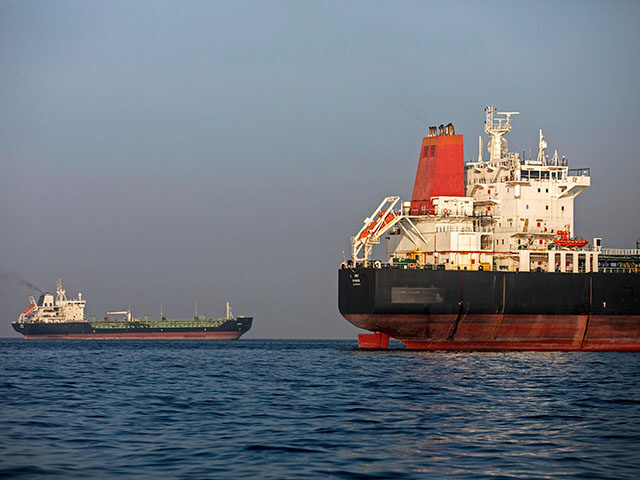
That is why the collapse in oil exports matters so much. The IRGC had grown to control as much as half of Iran’s oil trade, tying the regime’s most important source of revenue directly to the machinery that protects it. Iranian oil loadings have reportedly plunged from roughly 1.7–2.2 million barrels per day before the war to around 250,000 in August.

The Islamic Republic can survive an impoverished population if it can still finance repression. But when it can no longer pay the forces it depends on to crush dissent, the foundations of the regime begin to crack.
Trump Declares Iran a ‘Failed Nation’: ‘Leadership Is In Total Disarray’

U.S. Strikes Iranian Launchers Set to Mine Hormuz, IRGC Vows ‘Severe Repercussions’

U.S. Strikes Iranian Launchers Set to Mine Hormuz, IRGC Vows ‘Severe Repercussions’

U.S., Iran Trade Strikes in First Escalation in over a Month as Tehran Targets American Bases in Jo

U.S., Iran Trade Strikes in First Escalation in over a Month as Tehran Targets American Bases in JordanWatch: Trump Posts A.I. Video of Iran’s Kharg Island ‘Blown to Smithereens’

Watch: Trump Posts A.I. Video of Iran’s Kharg Island ‘Blown to Smithereens’

The Islamic Republic is betting everything on a war of attrition designed to survive U.S. firepower long enough to hurt American voters at the pump and turn the November midterms against Trump.

A new state-linked Nour News article effectively spells out the strategy. The Islamic Republic knows it cannot match overwhelming U.S. air and naval power, so it wants to make every additional American strike economically and politically expensive.

The weapons in this phase are not just missiles. Nour News points directly to energy-market disruption, higher shipping and insurance costs, pressure on diesel and other refined fuels, supply-chain disruption and ultimately the U.S. ballot box.

The recent Larak confrontation is presented as the model.

After the U.S. struck IRGC launchers associated with mine-laying operations around the Strait of Hormuz, the Islamic Republic retaliated against U.S. positions in Jordan.

But Nour News argues the objective should go beyond simply answering the last strike. Make Trump fear the economic and electoral consequences of ordering the next one. That is the Islamic Republic’s new attrition doctrine.

It cannot defeat the United States militarily, so it wants to outlast it politically. Mohsen Rezaei’s arrival as secretary of the Supreme National Security Council fits directly into this strategy.

The former IRGC commander embodies the old doctrine of absorbing enormous punishment while exporting enough economic, military and political pain to exhaust the enemy’s willingness to continue. But there is a potentially catastrophic flaw. The Islamic Republic is attempting a war of economic attrition against a country vastly more capable of absorbing economic attrition.

Every additional disruption around Hormuz also threatens Iran’s own ability to move oil, collect hard currency and keep its remaining shadow trade functioning. More attacks on shipping create more justification for targeting tankers, shadow-fleet operators, oil buyers, exchange houses, foreign banks and intermediaries still connecting the Islamic Republic to the global economy. And Hormuz itself is becoming a depreciating weapon.

Persian Gulf states are expanding pipelines, alternative ports and routes around the Strait. Every month those alternatives grow is another month the Islamic Republic’s geographic leverage becomes less powerful.

The political gamble is even more extraordinary. The Islamic Republic is effectively wagering Iran’s oil revenue, currency, investment climate and remaining economic stability on the assumption that American voters will punish Trump in November before economic pressure breaks Iran first.

That means accepting still more pain inside Iran in the hope that Americans eventually become angry about prices. The United States can absorb expensive gasoline and an election loss. The Islamic Republic has to survive restricted oil exports, collapsing investment, sanctions enforcement, fuel shortages, currency deterioration and growing unrest all at the same time.

Nour News is presenting this as asymmetric brilliance. But when a regime moves its war strategy from defeating the U.S. military to influencing the U.S. midterms, it is admitting the battlefield is no longer where it believes it can win.

Leave a Reply

Your email address will not be published. Required fields are marked *

This site uses Akismet to reduce spam. Learn how your comment data is processed.