You can’t reform Islam. Islam is ‘perfect’. Muhammad said so.
Those calling for a Muslim reformation are overlooking the consequences of the revolt that Martin Luther prompted against Rome. Were Islam to replicate that upheaval, as many seem to wish, the world would be convulsed for bloody centuries to come
 Martin Luther unleashed his attack on the monolithic Catholic Church exactly 499 years ago on All Saints Eve Now (now popularly known as Halloween) when he nailed his 95 theological theses on the Church door of Wittenberg. Now, as we approach the quincentenary of that momentous event it is possible to gain some long-term perspective on its essential nature and impact on modern history. In particular, it is an ideal time to explore the grim implications of such a religious upheaval for the crisis of Islam, which is engulfing much of the world in the same type of internecine and sectarian violence that characterized the epochal upheaval that convulsed Christian Europe.
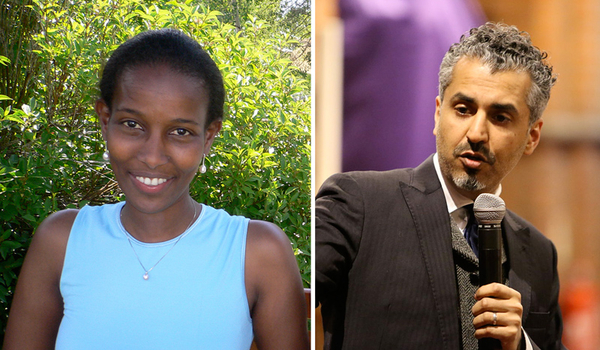
Continually there are demands for Islam to undergo its own ‘reformation’ akin to that endured by the West half a millennium ago. Ayaan Hirsi Ali’s polemic, Heretic: Why Islam Needs a Reformation Now (2015), exemplifies this campaign, envisaging a reformed Islam akin to liberal Christianity in its capacity to accommodate the modern world. She states the case against the savagery of fundamentalist Islamism in a defiant and optimistic fashion, drawing great encouragement from the various calls for reform that were manifest in the Muslim world during the so-called Arab Spring. Equally optimistic calls come from Muslim intellectualswho imagine that Muslims around the world could band together to overthrow Muslim despots, reject Sharia law, establish new liberal constitutions, and deploy diaspora Muslims living in Western countries like Australia as “ambassadors [to] educate their non-Muslim neighbours about the peaceful, compassionate and sharing nature of Islam in order to bring Muslims and non-Muslims closer together”.
Tragically, much of this is fanciful. In their enthusiasm, these commentators have imposed an idealised vision of the rationalism of the 18th century Enlightenment upon the brutal religious passions of the 16th century Reformation. Moreover, there seems to be little evidence that the contemporary despots, theocrats, and jihadists that dominate the Muslim world will relinquish their wealth and power or give up on their apocalyptic dreams of global conquest. Moreover, these Muslim leaders and their many supporters are heirs to an ancient intellectual counter-revolution that diverted Islam away from the rationalism that facilitated the Scientific Revolution and Enlightenment in the West. Instead they embrace a theological obscurantism that Robert R. Reilly has carefully analysed in The Closing of the Muslim Mind: How Intellectual Suicide Created the Modern Islamist Crisis (2010). As I have observed:
“Reilly details how the emerging religion of Islam initially embraced the rationality and scientific orientation of the Hellenic world to which it was a successor before it abruptly turned its back on this heritage and embraced a quite primitive form of theological irrationalism. The resulting world-view fundamentally undermined Islam’s capacity to embrace science, democracy and economic development down to the present day.”
Nothing has changed: Islam remains constitutionally unable to embrace the open society that the West enjoys. Instead Islamists and other devotees of ultra-reactionary Saudi-backed Salafi fundamentalism are vigorously seeking to reassert this medieval theological irrationalism throughout the Muslim world. They are never going to yield to calls for reform.





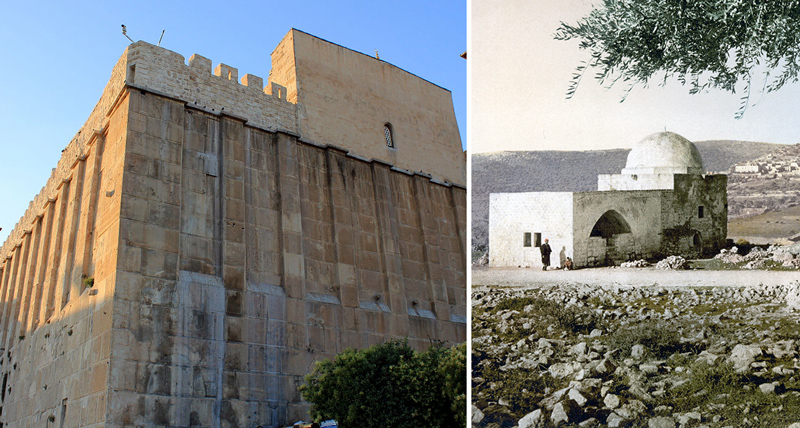 UNESCO’s latest resolution to deny any Jewish link to Jerusalem’s Temple Mount, the most central of all Jewish holy sites, is not the first time the body has tried to rewrite and falsify a history going back thousands of years. UNESCO had previously declared the Tomb of the Patriarchs in Hebron (left) as the “Ibrahimi Mosque,” and Rachel’s Tomb in Bethlehem (right) as the “Bilal ibn Rabah Mosque.” (Images source: Wikimedia Commons)
