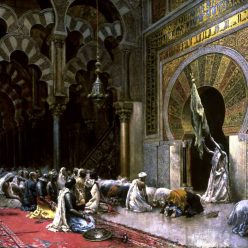
Sayyid Qutb explained:
“The chasm between Islam and Jahiliyyah [the society of unbelievers] is great, and a bridge is not to be built across it so that the people on the two sides may mix with each other, but only so that the people of Jahiliyyah may come over to Islam.”
Got it? Bridges are really just proselytizing mechanisms to convert unbelievers to Islam, not to engage in genuine dialogue.
Interfaith Relations in the Quranic Tradition
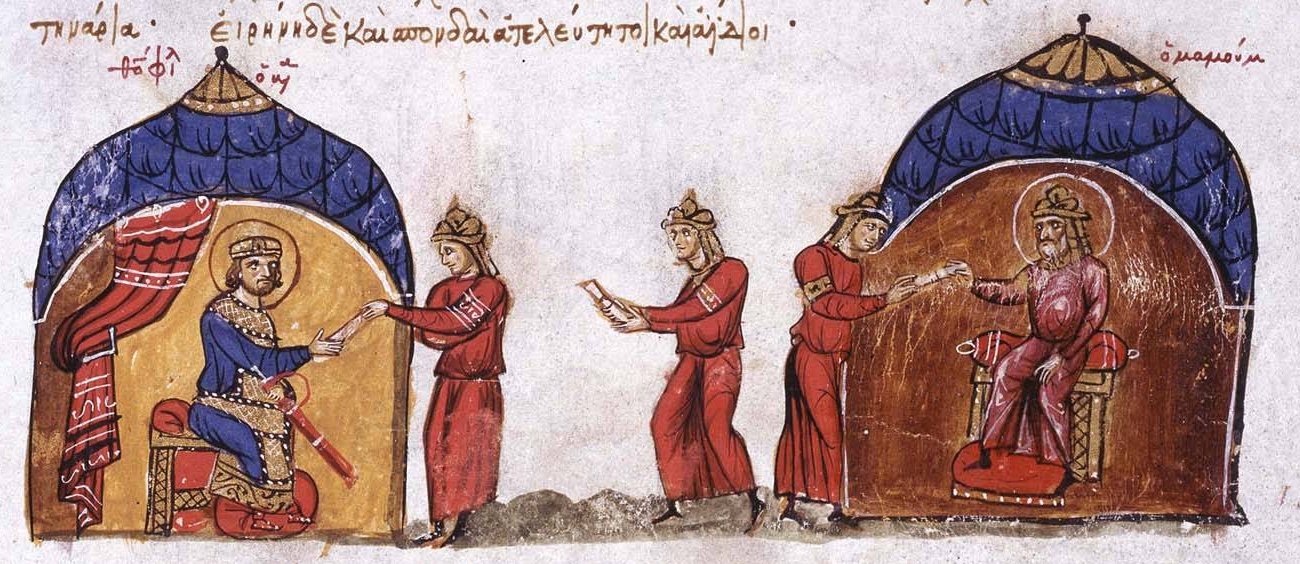
To understand any potential agreement between Israel and its neighbors, or for that matter between Muslims and non-Muslims, it is essential to understand how Muslims operate theologically regarding territory, and how Islam understands it relationships with non-Muslims. Only then can we address the question whether Muslims can ever accept a Jewish state on land they believe is theirs forever.
Territorially, Islam divides to the world into two realms:
1. Dar al-Islam (World of Islam): the area Islam has conquered. Once territory has been conquered by Muslims, it must remain Muslim forever. The Hamas constitution explains this clearly, calling all of pre-1948 British Mandatory Palestine waqf, meaning it belongs to God. Once it belongs to God, it belongs to God forever. (Allah is not God.)
2. Dar al-Harb (World of War): the part of the world not yet conquered by Muslims. According to the Quran and Shari’a (Islamic law), its time is coming.
There cannot be permanent peace between these two worlds. There can, however, be territorial accommodation, modelled after agreements the Prophet Muhammad reached when he was unable to defeat his enemies. According to Islamic tradition, Muhammad fought the tribe of Quraysh at Hudaibiya near Mecca, but could not defeat it. To buy time, he signed a temporary truce, or armistice, (Hudna or Sulh in Arabic) which was supposed to last for 10 years. It lasted two years, until Muhammad realized he had sufficiently rearmed and was strong enough to defeat the Quraysh. He attacked them and won.