by Timon Dias/Gatestone Institute
“If Lady Justice is truly blind, she will prosecute all of us or none of us. I hope none of us.” — Geert Wilders, MP and Leader of the Party for Freedom, the Netherlands.
A more recent development is the pending Dutch Moroccan takeover of the drugs and human trafficking businesses.
Who, actually, are the Dutch Moroccans about whom Dutch MP Geert Wilders recently stated: “The fewer, the better”?
During the 1960’s, the Netherlands chose to attract migrant workers to perform low-skilled manual labor. This group included Turks, Spaniards, Portuguese and Moroccans. It was never the original intent of the Dutch government permanently to settle these workers; they were expected to return to their home countries after a few years.
In most instances, they did not. Family reunification laws — derived from the European Treaty of Human Rightsarticle 8: Right to family life — provided that migrant workers had the right to bring their families to the Netherlands and settle in a permanent manner.
Moroccans now number 393,000 (p.37), comprise 2.3% of the Dutch population and are the sixth-largest ethnic minority.
The majority of Dutch Moroccans, descended from migrant workers, ethnically belong to the group of Moroccan Berbers. A minority of Dutch Moroccans are ethnically Arab Moroccans. Only 6.5% of current Dutch Moroccans came as migrant workers; around 49% were born in the Netherlands; the remaining group, nearly half, entered the country as a part of family reunification.
Wilders is now pressing charges against the Dutch Labour Party leader Diederik Samson and Labour Party Chairman Hans Spekman, who said, “Moroccans have an ethnic monopoly on street crime” and “Moroccans that will not abide by the law, must be humiliated in front of their own people.”
Wilders says: “If lady justice is truly blind, she will prosecute all of us or none of us. I hope none of us.”
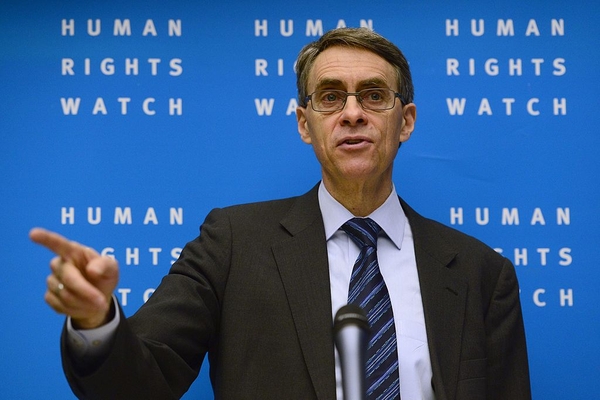 Dutch member of parliament Geert Wilders.
Continue reading The Moroccans That Infuriate the Dutch