
The United Nations, in a “non-binding agreement” that almost all UN member states will sign at a ceremony in Morocco in early December, is making migration a human right.
- It cannot be stressed enough that this agreement is not about refugees fleeing persecution, or their rights to protection under international law. Instead, the agreement propagates the radical idea that migration — for any reason — is something that needs to be promoted, enabled and protected.
- The UN has no interest in admitting that its agreement promotes migration as a human right; until recently, there has been little debate about it. More debate might risk jeopardizing the entire project.
- UN member states are not only supposed to open their borders for the migrants of the world, but should also help them pick and choose their future country by providing them with comprehensive information about each country they may wish to settle in.
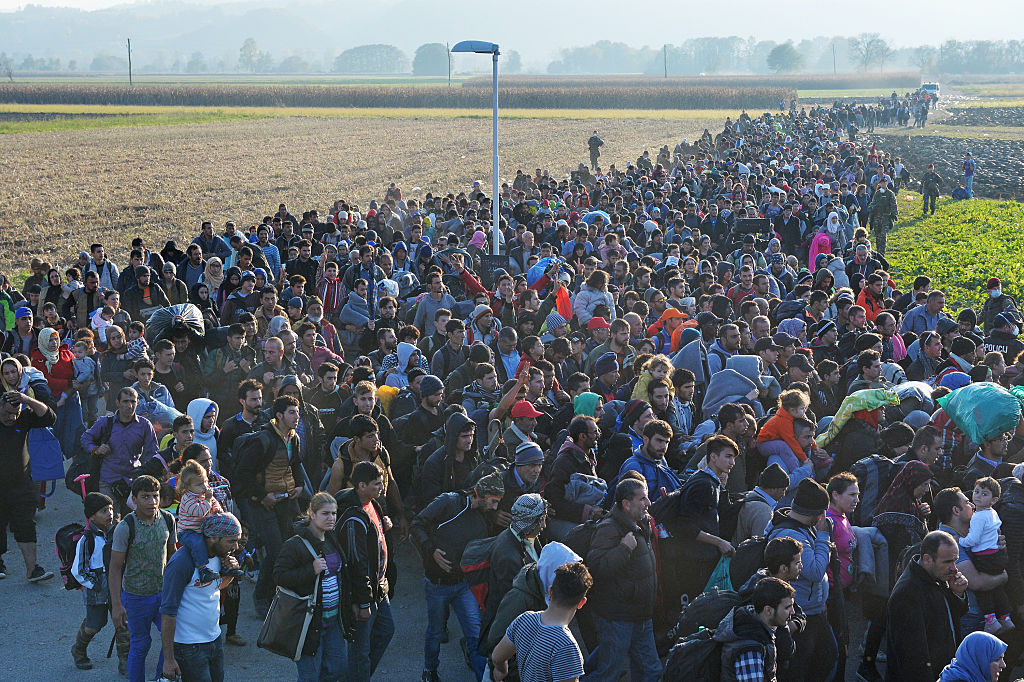 A new UN agreement, which almost all member states plan to sign in December, propagates the radical idea that migration — for any reason — is something that needs to be promoted, enabled and protected. Pictured: Migrants walk through fields towards a holding camp in the village of Dobova, Slovenia on October 26, 2015. (Photo by Jeff J Mitchell/Getty Images) |


 Yes indeed, his “cultural norms” are “different.” But why are they paramount? Why can’t France enforce its own “cultural norms”? Why can’t any Western country?


 As to Israel, Mahathir Mohamed blames its existence for all the subsequent trouble in the Middle East. He says that before Israel was founded, there were no problems in the Middle East. Let’s just begin to examine that remark by looking at the Middle East today. The Sunni-Shia


